
Quote Prep · October 4, 2026
How to budget for early-stage startup insurance
Build a quote-based startup insurance budget using launch plans, realistic projections and upcoming business milestones.

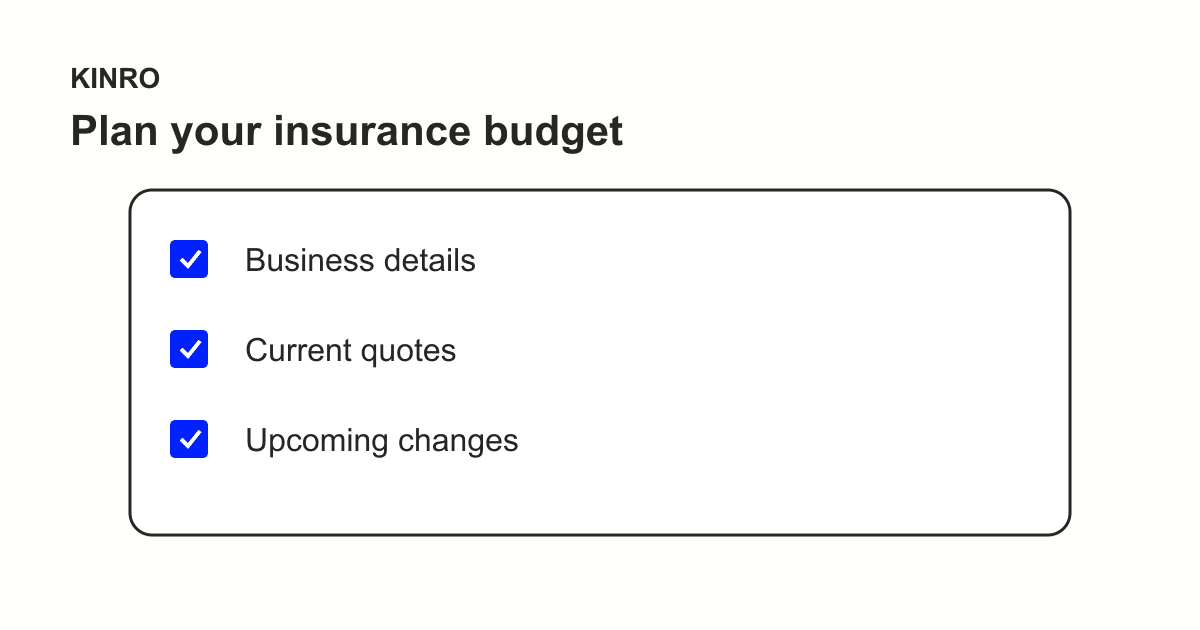
An early-stage startup's insurance budget should be based on quotes for its actual plans, not a generic price range. There is no reliable universal annual cost for every new company. Build the estimate around the activities starting now, then identify the changes that will require another review.
Separate launch costs from later changes
Write down your opening date, first services, locations and people involved. Identify near-term milestones such as signing a lease, hiring staff, adding delivery vehicles or accepting a large customer contract.
Give the agent both the current facts and planned changes. Ask which quotes address the launch operation and when a milestone should trigger an update. This helps avoid treating a preliminary estimate as a permanent budget for a changing company.
Prepare realistic projections
Have expected annual sales and payroll ready, with a short explanation of the assumptions. Include founders' duties, employees and any subcontracted work. Keep employees and independent contractors separate in your records and have classification questions reviewed.
List equipment and other property values, business locations and vehicle use. Include prior business insurance or claims where applicable. Explain what has been purchased, what is leased and what is still being planned.
Bring contracts that request insurance. A quote designed for a first small project may have different terms from one intended to support a larger agreement. Have the actual clause reviewed before using it as a budgeting assumption.
Build a quote-based budget
For each proposed policy, record the annual premium, fees, installment terms and effective date. Ask whether the premium can change after an audit of sales or payroll. Keep any deposit or payment-plan cost visible.
Consider deductibles separately from premium. They describe an amount you may bear after a covered loss, not an installment of the purchase price. Ask how the deductible or other retained amount works under the particular policy.
Do not use an advertised average as a promised startup rate. An estimate becomes more useful when it states the business description, limits, deductibles and assumptions behind it.
Review the coverage and budget together
A lower-price quote may include different activities, limits or exclusions. Ask what changed before assuming it is a better option. Packages and discounts are subject to eligibility and do not establish a guaranteed saving.
Have staffing, vehicle use and applicable state requirements reviewed using your actual plans. Avoid building the budget around an assumed owner exemption or a presumed coverage requirement.
Next step
Contact Kinro with your launch plan and projections. Use the startup coverage comparison guide to frame policy questions, and the small business rates guide to compare annual premiums and payment terms.
Check your options
Before you rely on any coverage, confirm it suits your business with a licensed insurance professional.
Answer a few questions about your business. Eligible businesses can continue to an online application. Otherwise, a licensed Kinro agent follows up with next steps.
Educational information, not a coverage determination. Examples are hypothetical. Policy wording, exclusions and underwriting decide whether coverage applies.