
Quote Prep · October 4, 2026
Small business insurance cost: understand your quote
Compare annual premium, payment terms, fees and deductibles when reviewing a small business insurance quote.

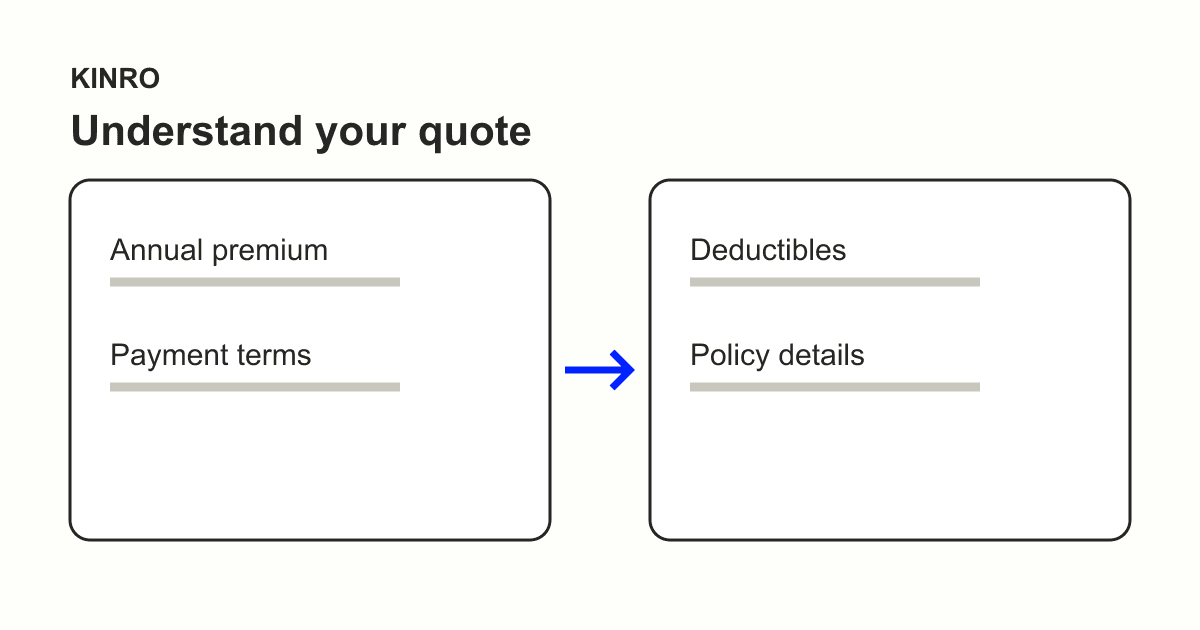
Small business insurance does not have one universal price. Your premium depends on the business described in the application, the policies being quoted and their terms. To understand a quote, separate the annual premium, payment arrangement and the costs you could bear after a covered loss.
Read the annual price before the monthly payment
A monthly payment is not the same as the annual policy premium. Ask for the total cost, payment schedule, fees and any deposit. Review whether an installment plan changes the amount payable and whether cancellation terms affect the balance.
Also ask whether a premium is based on estimates and can be adjusted after a policy audit. If sales or payroll estimates are used, keep the records the insurer requests. A payment shown on a quote does not guarantee that it is the final cost under every circumstance.
Understand what the quote includes
General liability, property, professional liability, employee and vehicle policies address different exposures. A package quote may combine some of them, while another quote may only include one line of coverage.
Compare the operations listed, coverage limits, deductibles, exclusions and endorsements. Check policy dates and the business entity being insured. A cheaper option may reflect a different description of the work or different policy terms.
For background, read how to compare business insurance quotes beyond price.
Prepare the facts that shape an estimate
Give the agent a clear description of your work and locations. Prepare current or projected sales and payroll, staffing roles, property values and vehicle details where relevant. Explain prior claims and any changes planned during the policy period.
Send lease or client insurance requirements with the application. Specific limits or endorsements can change the options being considered. Have an agent review the actual contract rather than relying on a generic policy checklist.
Ask about cost tradeoffs
You can ask for quotes with alternative limits or deductibles. Compare what changes in the premium and what you could pay after a covered loss. Do not assume a higher deductible always creates a saving or that a bundle is always cheaper.
Review which coverage addresses each exposure before removing a policy to reduce cost. Discounts, eligibility and final premium depend on the insurer and business facts; there is no promised saving from completing an intake form.
Next step
Gather your business details and contact Kinro. Request options based on the same application facts, then review annual cost, payment terms and coverage together. For a new company still planning its budget, read startup insurance budget preparation.
Check your options
Before you rely on any coverage, confirm it suits your business with a licensed insurance professional.
Answer a few questions about your business. Eligible businesses can continue to an online application. Otherwise, a licensed Kinro agent follows up with next steps.
Educational information, not a coverage determination. Examples are hypothetical. Policy wording, exclusions and underwriting decide whether coverage applies.